
REVIEW · MUMBAI
Mumbai Slum Tour with Dhobi Ghat Laundry & Train Ride Tour
Mumbai’s working heart comes into view on this three-hour tour, from the rows of Dhobi Ghat laundry to Dharavi’s tightly packed workshops and homes. You’ll finish with a short ride on a local train, the everyday transport that keeps the city moving.
I like the resident-led approach, especially since guides such as Alkama and Bharti explain the area’s history and daily work from local experience. I also like the useful mix of sights: laundry, small businesses, community life, and public transport, rather than a tour that looks at Dharavi from one viewpoint only.
The main consideration is that this is a walking tour through a densely settled neighborhood, not a polished sightseeing outing. You should be comfortable seeing working and residential areas, following local etiquette, and keeping an open mind about the word slum and the people who live there.
Key points to know before booking
- Dhobi Ghat in 30 minutes: See Mumbai’s famous open-air laundry and learn how the washing operation works.
- Dharavi with a resident guide: Spend about two hours looking at daily life, homes, and small-scale industry.
- Real work inside the neighborhood: The route may include plastic recycling, leather, garments, textiles, and other local businesses.
- A short train ride: Travel from Mahim on a local train for about 15 minutes, ending near Mahalaxmi.
- Small group format: The tour has a maximum of 15 people, which should make it easier to hear the guide.
- Low price with transport included: At $11.36 per person, the fee covers entry costs, the guide, train tickets, and travel fees.
Why this tour offers more than a quick photo stop
Mumbai can be hard to read at street level. Its towers, rail lines, markets, workspaces, and homes press close together, and the city’s economy often operates in places that are easy to pass without understanding. This tour gives you a guided look at two such places: Dhobi Ghat and Dharavi.
I value the fact that the experience is built around work. Dhobi Ghat is not simply a colorful photo stop, and Dharavi is not presented only as a film location. You get a chance to see how people earn money, organize space, and keep businesses running in compact surroundings.
The tour also helps you connect the stops. Laundry work shows one part of Mumbai’s service economy. Dharavi introduces recycling, leather, garments, and textiles. The train ride then gives you a brief look at the transport system used by local people to cross the city.
That combination makes the tour more useful than a visit to one attraction alone. You see a famous sight, enter a working neighborhood, and then use public transport. The result is a short but varied introduction to Mumbai’s daily rhythm.
More Train Tours in Mumbai:
- Dabbawala, Dhobi Ghat & Dharavi slum Tour with Local Train Ride
★ 5.0 · 102 reviews - Mumbai: Dharavi Slum and Dhobi Ghat Tour with Train Ride
★ 5.0 · 9 reviews - Primmum Mumbai Sightseeing With Local Train Ride Experience
★ 5.0 · 7 reviews
Dhobi Ghat: 30 minutes among the laundry lines
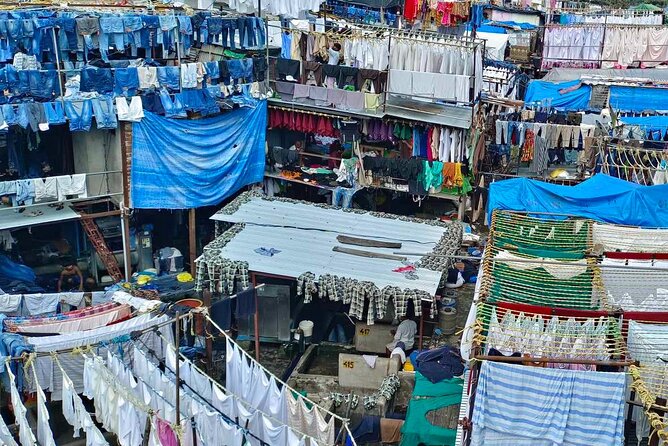
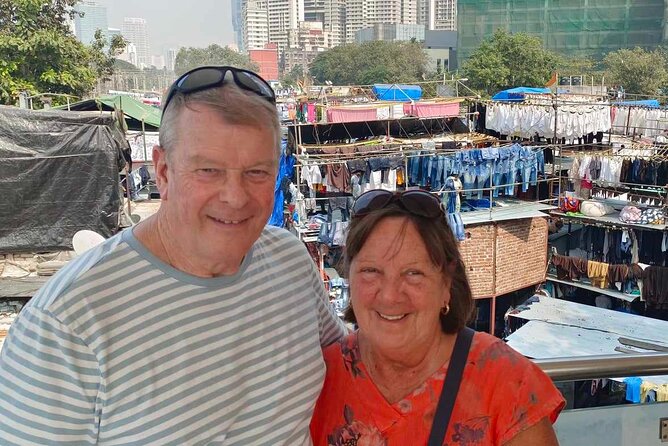
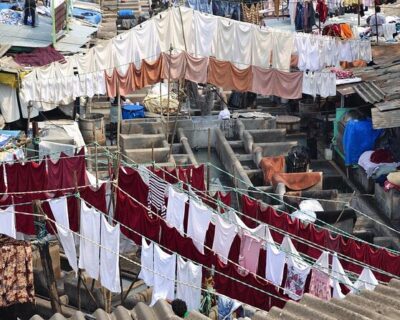
The tour begins at Dhobi Ghat, known as the world’s largest outdoor laundry. You spend about 30 minutes here with a guide, learning about the work and the activities that take place in this unusual open-air setting.
The appeal is easy to understand. Laundry is usually hidden from sight, handled in the back rooms of hotels, hospitals, restaurants, and homes. At Dhobi Ghat, the process becomes part of the city’s public view. Rows of washing areas and the labor behind them offer a practical look at an important service.
Thirty minutes is enough for an introduction, but not enough for a long visit. That is useful if you want to keep the tour moving, though you should not expect a detailed workshop or an extended photography session.
Your guide matters here. A local guide can explain what you are seeing and help you avoid treating the site as a stage set. Pay attention to the working nature of the place. People are there to earn a living, so respectful observation is more important than getting the perfect picture.
Dharavi: two hours of work, homes, and community life
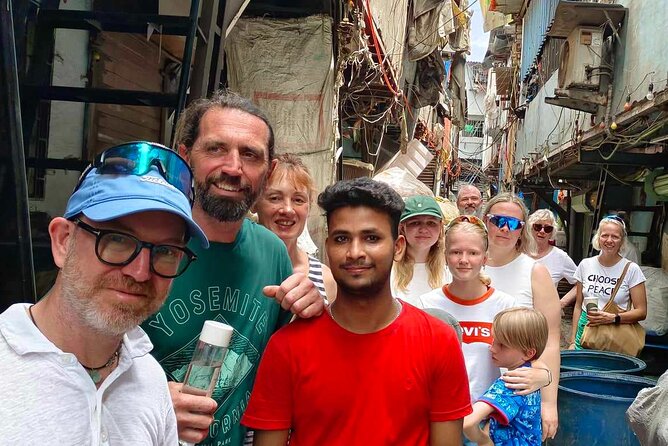
Dharavi takes up the largest part of the tour, about two hours. This is where the experience becomes more than sightseeing. You walk through a densely populated neighborhood with a local English-speaking guide and learn about how people live and work there.
Dharavi is widely known because of Slumdog Millionaire, but the film is only one reason people recognize the name. The area has almost one million residents, according to the tour information, and it contains homes, workshops, businesses, and community spaces. A guided walk can correct the narrow picture many people bring with them.
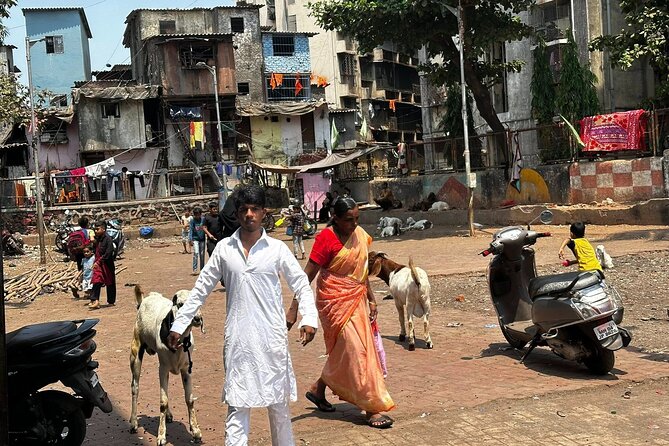
The route includes small-scale business activity such as plastic recycling, leather work, garment production, and textiles. These industries help explain why Dharavi is not simply a place of poverty. It is also a place of enterprise, skill, and income generation, even though living conditions can be difficult.
I would approach this part with care. You are entering a residential and working neighborhood, not a museum. Keep your voice down, follow the guide’s instructions, and ask before taking photographs. The supplied details do not promise a specific photography policy, so the safest rule is to be discreet and respectful.
The guide’s role is especially important. Alkama is described as highly conversational and able to explain the area’s history in detail. Bharti is also identified as a helpful and informative local guide. Since the guide assigned to your departure may differ, you should treat those names as examples rather than a guarantee.
A good guide can help you understand the difference between seeing hardship and understanding a community. You may notice narrow lanes, compact living spaces, and workshops operating close to homes. You may also see people working, children playing, and local businesses serving everyday needs. The point is not to collect dramatic images. It is to see a fuller picture.
The two-hour timing gives Dharavi room to breathe. You are not rushed through in ten minutes, yet the visit remains manageable within a half-day schedule. If you are staying in Mumbai for only a short time, this is a practical way to see an area that would be difficult to interpret on your own.
At the same time, the format may not suit everyone. If you prefer quiet temples, museums, or traditional monuments, this tour asks more of you emotionally and socially. You need to be ready for an experience that may challenge your assumptions.
The Mahim to Mahalaxmi train ride
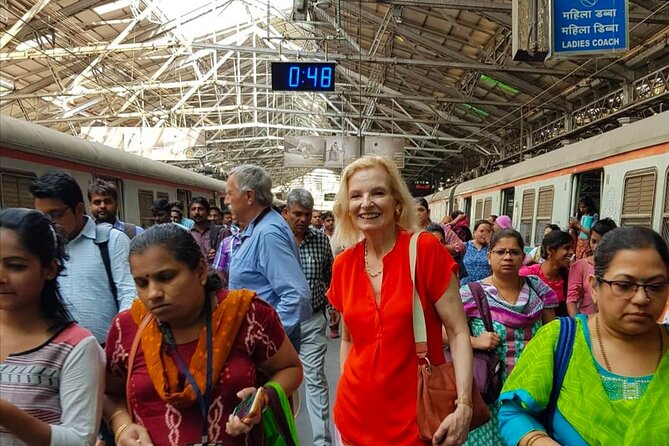
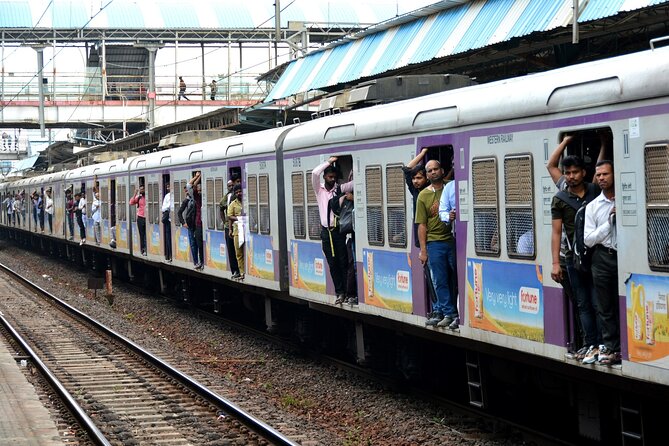
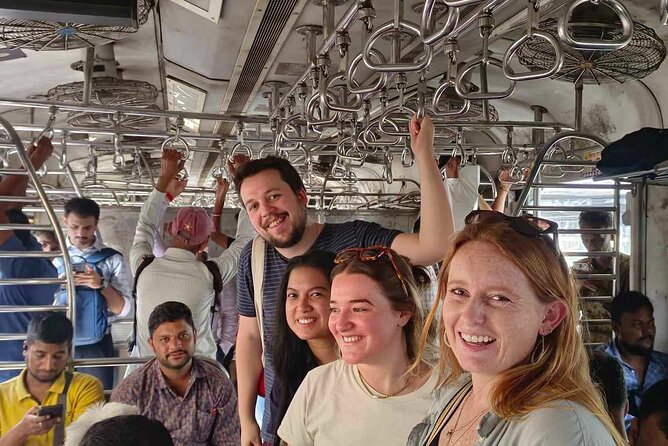
After Dharavi, the tour goes to Mahim station for a short local train ride. The ride lasts about 15 minutes and ends near Mahalaxmi, where the experience finishes.
This is a small part of the tour, but I like its purpose. Mumbai’s trains are not just an attraction. They are a basic part of city life, and taking one gives you a direct connection with how people move around Mumbai each day.
You should keep your expectations in proportion. Fifteen minutes is a brief sample, not a full railway tour or a long trip across the city. Still, it adds a useful final note after the walking portions. You have seen places where people work, then you travel as local commuters do.
Train tickets and travel fees are included. That matters because the ride is built into the tour rather than left for you to arrange. The tour ends at Mahalakshmi Railway Station, not back at the original meeting point, so plan your next stop from there.
Same tracks, a very different ride:
- Mumbai City + Dabbawala aka Lunchbox + Train Ride Tour – The Unfeigned Mumbai.
★ 5.0 · 6 reviews - Mumbai: Dhobi Ghat Tour with Dharavi and Train Ride Options
★ 3.4 · 5 reviews - Dharavi Slum & Dhobi Ghat Mumbai: Private Guided Tour
★ 5.0 · 4 reviews - Dhobi Ghat Laundry and Dharavi Slum Tour with Local Train
★ 5.0 · 4 reviews
Price, group size, and what the fee covers
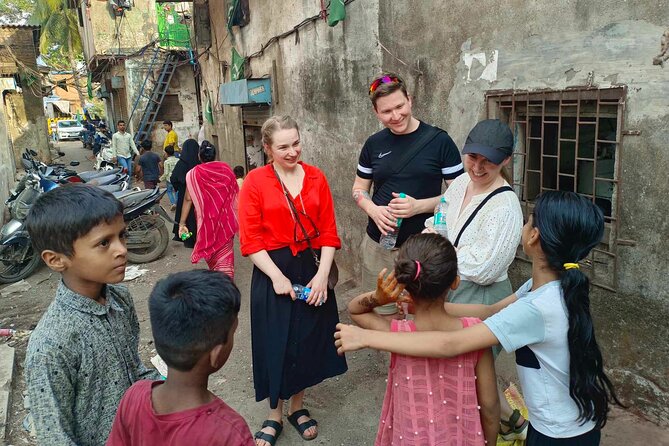
At $11.36 per person, this is an unusually inexpensive guided experience for Mumbai. The value comes from the number of elements packed into three hours: two guided visits, transportation between stages, a local train ticket, and an English-speaking guide.
The price also removes some of the small costs that can add friction to a short city tour. Entry fees are included, as are travel fees and the train ticket. Food is not included, but the tour does not describe a meal or tasting, so that exclusion should not affect most bookings.
The maximum group size is 15 people. That is not a private tour, but it is small enough to be more manageable than a large coach group. In narrow lanes, group size matters. You will still need to stay close to the guide, but a 15-person limit should help with hearing explanations and moving through compact areas.
The tour is booked, on average, nine days ahead. That is not a promise of availability, but it suggests you should not leave the booking until the last moment if your Mumbai schedule is fixed.
The meeting point is Third Wave CoffeeTip Road, Unit no. 58, Ground, Ram Mahal, Senapati Bapat Marg, Marinagar Colony, near Mahim station. The listing gives a detailed address, so check it carefully before setting out. The end point is Mahalakshmi Railway Station.
Confirmation is provided at booking, and the activity is near public transport. Comfortable walking shoes are recommended. Those details matter more here than they would on a vehicle-based city tour, since much of the experience takes place on foot.
Who will get the most from this experience
I would recommend this tour to you if you want to understand how Mumbai works beyond its famous monuments. It suits curious first-time visitors, photographers who can work respectfully, students, and anyone interested in urban life, transport, and small business.
It is also a good fit if you want a short activity that fills a morning or afternoon without taking up a whole day. Three hours gives you a focused introduction, while the train finish leaves you near a useful Mumbai transport point.
You may want to skip it if you are uncomfortable entering residential areas or if you expect a gentle, highly polished sightseeing experience. Dharavi should not be treated as entertainment, and the tour requires sensitivity.
Families may be able to participate, since most people can take part, but the information does not list a specific child policy or stroller suitability. If those details matter to you, ask the provider before booking.
How to visit Dharavi respectfully
Your attitude will shape the quality of this experience. Listen first. Let the guide explain where you are and how the neighborhood functions before forming conclusions.
Ask permission before photographing people, homes, or workplaces. Avoid blocking lanes, touching work materials, or turning private moments into souvenirs. A small group can pass through politely, but only if everyone stays aware of the people who live and work there.
It also helps to use careful language. Dharavi is widely called a slum, but the area is more than that label suggests. It includes housing, industry, services, and community life. The tour gives you a chance to see those parts together.
The film connection may come up, since Dharavi became famous internationally through Slumdog Millionaire. Treat that as context, not the main reason to visit. The real value is seeing current daily life rather than searching for movie scenes.
Booking flexibility and practical limits
Free cancellation is available if you cancel at least 24 hours before the start time. Cancellations made within 24 hours are not refunded, and changes in that period are not accepted. The cut-off follows local Mumbai time.
The tour includes a mobile ticket and confirmation at booking. You should keep the booking details available on your phone, especially since the meeting point is a specific coffee shop address near Mahim.
The experience lasts approximately three hours, but the individual timings are estimates: 30 minutes at Dhobi Ghat, two hours in Dharavi, and 15 minutes on the train. Moving between locations is included in the overall plan, so allow some flexibility afterward rather than scheduling something immediately at the end.
Should you book the Mumbai Slum Tour?
Book it if you want a low-cost, locally guided look at Mumbai’s working neighborhoods, and if you are willing to approach Dharavi with respect. The combination of Dhobi Ghat, small businesses, local history, and a train ride gives you more context than a single attraction visit.
The strongest reason to choose it is the resident guide. Alkama and Bharti are specifically associated with clear, helpful explanations, and the guide’s voice is central to making the visit meaningful rather than superficial.
Skip it if you want a relaxed sightseeing walk with little social or emotional challenge. For the right person, though, this is a compact and useful introduction to the people, work, and transport that shape Mumbai every day.
FAQ
How long does the Mumbai Slum Tour last?
The tour lasts approximately three hours, including visits to Dhobi Ghat and Dharavi and a short local train ride.
What places does the tour visit?
The tour visits Dhobi Ghat, Dharavi, and Mahim station before taking a local train ride that ends near Mahalaxmi Railway Station.
How much time is spent at Dhobi Ghat?
The visit to Dhobi Ghat lasts about 30 minutes, and admission is included.
How long is the Dharavi visit?
The guided Dharavi portion lasts about two hours and focuses on daily life, homes, and small-scale businesses.
Is the local train ticket included?
Yes. The train ticket and other travel fees are included in the tour price.
Where does the tour begin?
The meeting point is Third Wave CoffeeTip Road, Unit no. 58, Ground, Ram Mahal, Senapati Bapat Marg, Marinagar Colony, near Mahim station in Mumbai.
Where does the tour end?
The tour ends at Mahalakshmi Railway Station, on Keshavrao Khadye Marg in the Mahalakshmi area.
Can I cancel for a full refund?
Yes, if you cancel at least 24 hours before the experience start time. Cancellations within 24 hours are not refunded.
Just added around Mumbai
- Mumbai Unseen: Local Train Ride And Sightseeing Tour★ 5.0 · 3 reviews
- All in one-Combo of City, Dhobighat, Slum & Dabbawala with ferry and train ride.★ 4.5 · 2 reviews
- Dharavi Slum & Dhobi Ghat Mumbai: Private Guided Tour★ 5.0 · 4 reviews
- Meet Dabbawala Visit Dhobi Ghat & Dharavi slum with Train★ 5.0 · 2 reviews
- Mumbai: Dhobi Ghat Tour with Dharavi and Train Ride Options★ 3.4 · 5 reviews
- Dhobi Ghat Laundry and Dharavi Slum Tour with Local Train★ 5.0 · 4 reviews
- Dabbawaala Dhobi Ghat Dahravi slum With Local Train Ride★ 5.0 · 2 reviews
- Best Combo Tour: Dabbawalas, Dhobi Ghat and Slum with Train★ 3.5 · 3 reviews
Mumbai Train Tours, compared.

Dabbawala, Dhobi Ghat & Dharavi slum Tour with Local Train Ride
Read our review →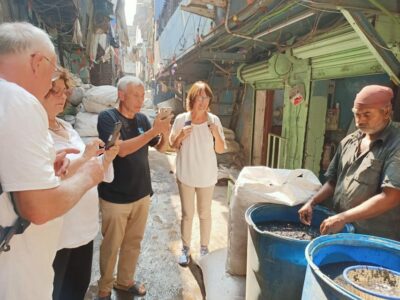
Primmum Mumbai Sightseeing With Local Train Ride Experience
Read our review →
Mumbai City + Dabbawala aka Lunchbox + Train Ride Tour – The Unfeigned Mumbai.
Read our review →
Dhobi Ghat Tour with Dharavi and Train Ride Options
Read our review →
Dhobi Ghat Laundry and Dharavi Slum Tour with Local Train
Read our review →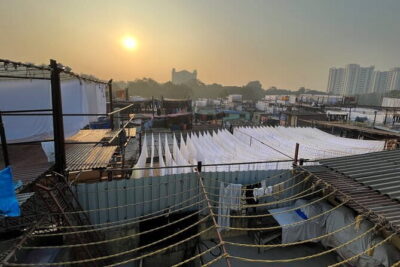
Dharavi Slum & Dhobi Ghat Mumbai: Private Guided Tour
Read our review →
Best Combo Tour: Dabbawalas, Dhobi Ghat and Slum with Train
Read our review →Browse the lists this tour appears in